How Long to Bake a Cake: Times, Temperatures & Doneness Tests
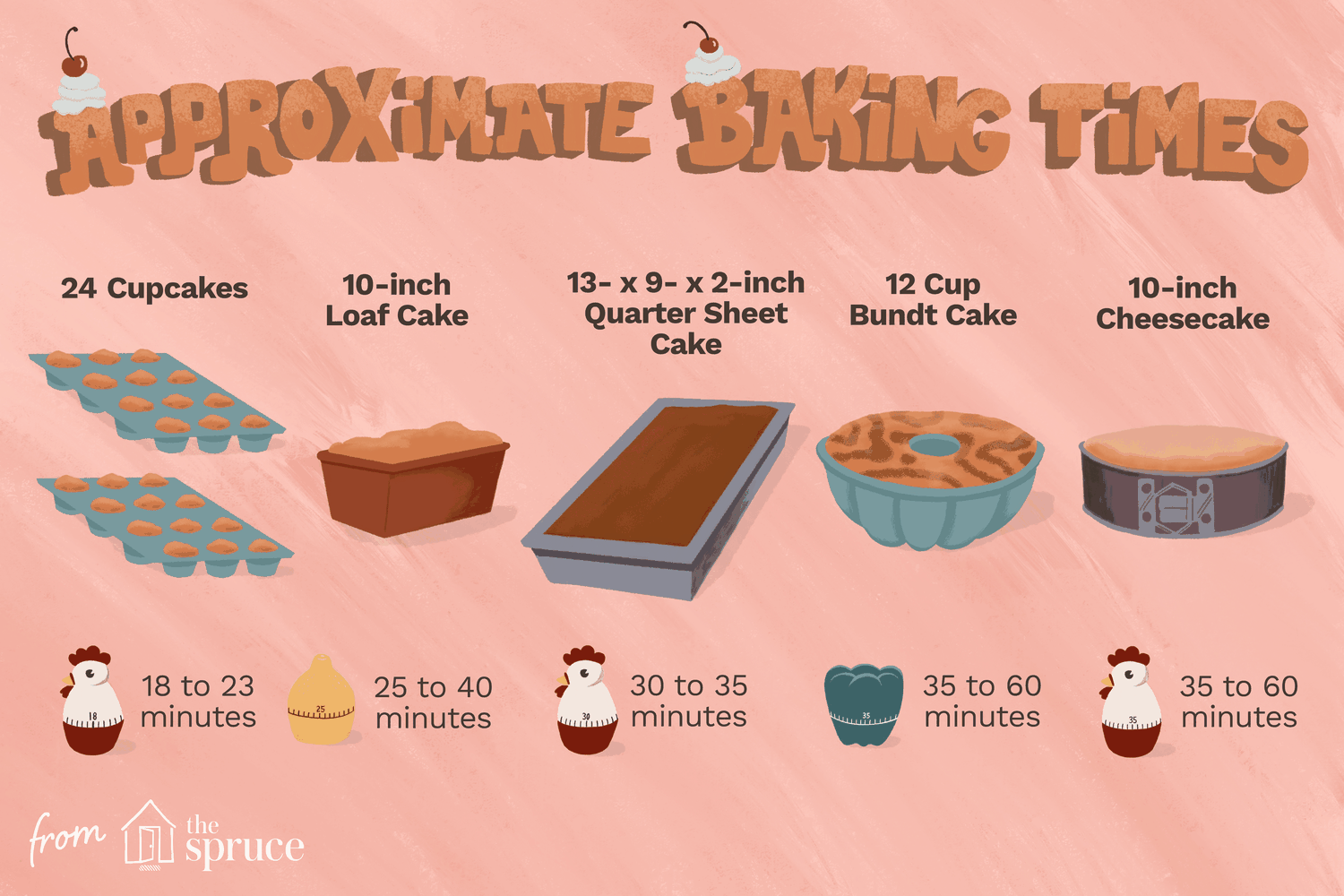
Baking a cake successfully is less about memorising exact minutes and more about understanding your recipe, your tin, and your oven. The question of how long to bake a cake has no single answer because every cake behaves differently. Use the timings in your chosen recipe as a starting point, then rely on proper testing for doneness.
Factors That Affect How Long to Bake a Cake
Several variables determine baking time. The most important are tin size, batter depth, oven type, and the material of the tin.
A shallow layer in an 8-inch tin will bake faster than the same volume of batter poured into a deeper 6-inch tin. Large or deep cakes need more time for heat to reach the centre, and they often benefit from a slightly gentler temperature to prevent the outside from over-browning before the middle sets.
Tin material also matters. Dark-coloured tins absorb heat faster and brown the edges more quickly than pale or silver tins. Silicone pans and heavy professional tins conduct heat differently, so the same recipe can finish at noticeably different times.
Always start with a tested recipe rather than relying on generic charts. Timings are guides only.
Oven Temperatures and Fan vs Conventional Ovens
Most classic sponge and butter cakes are baked at 180°C in a conventional oven. Fan ovens circulate air, so they are more efficient and usually require a 10-20°C lower setting - commonly 160°C fan.
A 12-inch square Victoria sponge baked in shallow sandwich tins took approximately 45-50 minutes at 160°C fan or 50 minutes at 180°C conventional. These are real-world examples, not universal rules. Recipes written for fan ovens already account for this difference; do not reduce the temperature further unless your particular oven runs hot.
Oven accuracy varies. Many home ovens run 10-20°C hotter or cooler than the dial shows. Invest in an oven thermometer and position racks in the centre unless the recipe states otherwise. Avoid 200°C for standard sponges, as the exterior can brown long before the centre is fully cooked.
How to Test When a Cake Is Done
Never rely on time alone. The most reliable test is inserting a skewer or cake tester into the deepest part of the cake. It should come out clean or with just a few moist crumbs. For chocolate cakes, a few moist crumbs are often preferable to a completely clean skewer.
The top of the cake should feel set and spring back lightly when touched. If it leaves a deep fingerprint or jiggles in the centre, it needs more time.
For deep cakes, always test in the very centre. Large cakes may require lower temperatures and longer baking to cook through without drying the edges.
Converting Cake Recipes to 6-Inch Pans
Many bakers want to scale favourite recipes down to 6-inch pans for smaller celebrations. The most accurate method uses the surface area of the tins.
Calculate the area with the formula πr². A 6-inch round tin has roughly 57% of the area of an 8-inch tin and about 45% of a 9-inch tin. Multiply each ingredient by this percentage to keep the proportions correct.
For example, if your 8-inch recipe calls for 500 g of flour, you would use approximately 285 g for a 6-inch version. Work in grams for precision. Because a 6-inch cake is often deeper than a shallow 8-inch layer, it may need slightly longer in the oven. Start checking at the original recipe time but be prepared to add 5-15 minutes depending on depth.
Common Mistakes to Avoid
- Treating baking time charts as exact without testing doneness
- Using the wrong oven temperature or ignoring fan versus conventional settings
- Not checking the centre of deep cakes
- Opening the oven door too often in the first half of baking, which can cause sinking
- Using dark tins without lowering the temperature slightly
Professional Tips
- Bring eggs and dairy to room temperature before mixing. Cold ingredients can affect how the cake rises and bakes.
- Prepare tins properly - grease and line with baking paper for easy release and even baking.
- Rotate the tin halfway through baking if your oven has hot spots.
- For delicate sponges, avoid over-mixing once the flour is added.
If you are working with perishable ingredients such as eggs, dairy, or fresh cream fillings, follow basic food-safety practices: keep the finished cake refrigerated if it contains uncooked or lightly cooked eggs or dairy, and consume within a few days.
FAQ
How do I adjust baking time for a deeper cake?
Deeper cakes need more time for heat to reach the centre. Expect to add 10-25 minutes compared with a shallow layer of the same volume. Always test the centre with a skewer rather than relying on time.
Can I rely only on baking time charts?
No. Charts provide useful starting points, but every oven, tin, and recipe combination is different. The skewer test and visual cues (springy top, set edges) are far more reliable than minutes on a clock.
For more practical baking advice, read our guides on how to decorate a cake for beginners or try the reliable sponge cake recipe as a base for your own creations.
If you want a perfectly baked celebration cake with professional decoration instead of experimenting at home, order a cake in Poltava from ТартаЛєнка. Our team handles the precise timing and finishing so you can simply enjoy the result.