Heavy Cream Biscuits: Tall, Tender and Easy to Make
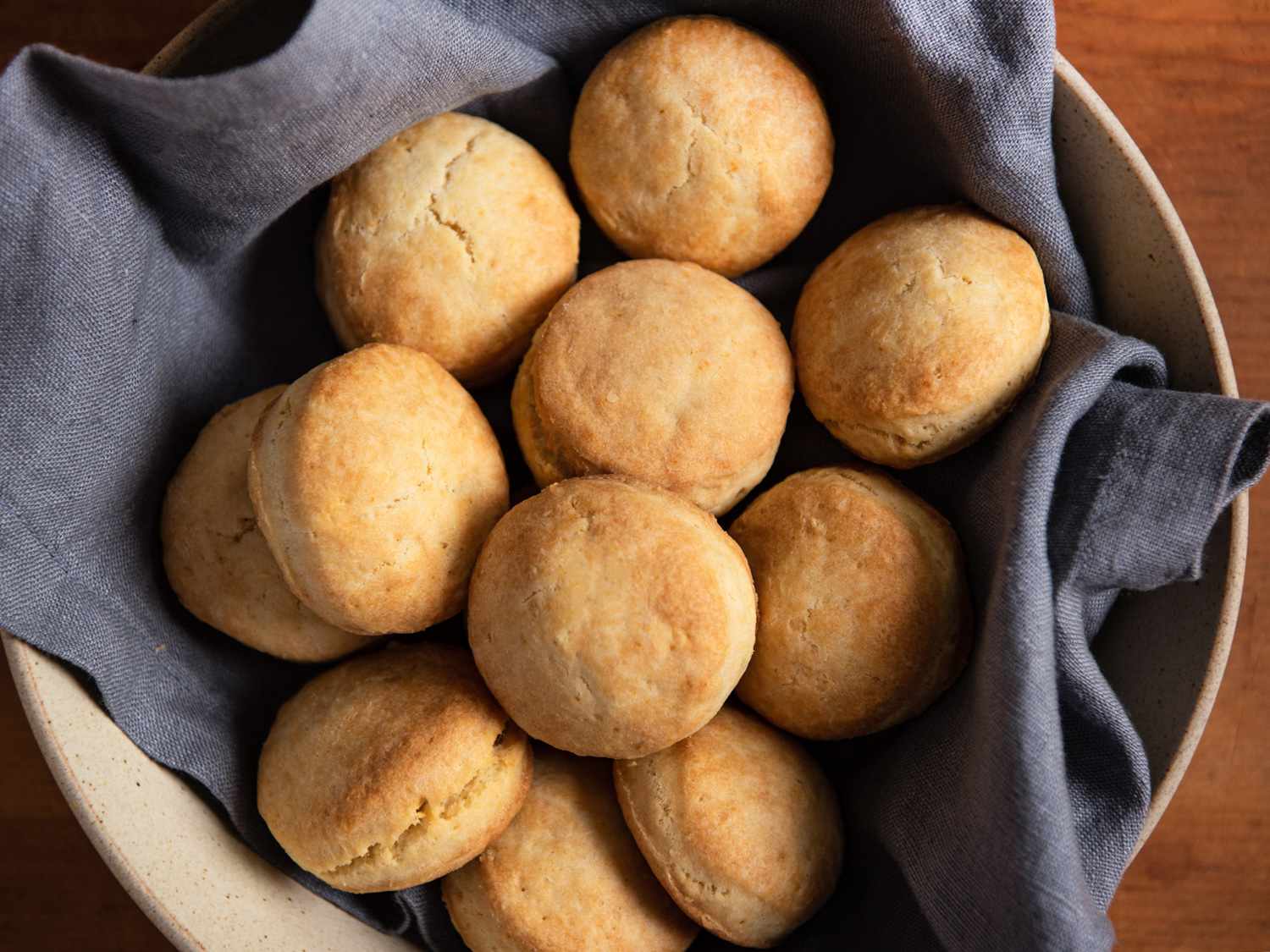
Heavy cream biscuits need only flour, baking powder, salt, a little butter and cold heavy cream. The cream supplies both the liquid and extra fat, so the dough comes together quickly and bakes into soft, tall biscuits with a tender crumb. This recipe uses 300 g of flour, 60 g of butter and 240 ml of cream. It makes 8 biscuits that bake in about 15 minutes.
Ingredients and Timing for Heavy Cream Biscuits
Prep time: 15 minutes Bake time: 12-15 minutes Total time: about 30 minutes Yield: 8 biscuits, cut with a 6 cm round cutter
Ingredients
- 300 g plain (all-purpose) flour, plus extra for dusting
- 12 g baking powder (about 3 level teaspoons)
- 3 g fine salt (about ½ teaspoon)
- 10 g sugar (about 2 teaspoons)
- 60 g cold unsalted butter, cut into small cubes
- 240 ml cold heavy cream, plus about 1 tablespoon for brushing
Keep the butter and cream in the fridge until the moment you use them. Cold fat is what makes the biscuits rise and flake.
If you are unsure what to buy, our guide to heavy cream vs heavy whipping cream explains the labels. If you cannot find heavy cream, see how to make heavy cream at home.
Step-by-Step Method for Heavy Cream Biscuits
- Heat the oven. Set it to 220°C (about 200°C fan) and line a baking tray with baking paper. Put the rack in the middle.
- Mix the dry ingredients. Whisk the flour, baking powder, salt and sugar in a large bowl.
- Cut in the butter. Add the cold butter cubes and rub them into the flour with your fingertips, working quickly. Stop when you have flat flakes and pea-sized pieces. Do not blend the butter in completely.
- Add the cream. Pour in 200 ml of the cold cream and stir with a fork or spatula until the dough looks shaggy. Add the remaining cream a spoonful at a time, only until no dry flour is left. Flours vary, so you may not need all of it.
- Shape the dough. Tip the dough onto a lightly floured surface and knead it 3-4 times, just until it holds together. Pat it into a rectangle about 2.5 cm thick.
- Fold for layers. Fold the dough in thirds like a letter, turn it 90 degrees, and pat it back to 2.5 cm thick. Repeat once more. Two or three folds are enough.
- Cut. Dip the cutter in flour and press straight down without twisting. Twisting seals the edges and stops the biscuits rising evenly. Re-pat the scraps gently and cut again. These last biscuits will be a little less tall.
- Arrange and brush. Place the biscuits on the tray with their sides just touching, which helps them rise upward. Brush the tops lightly with the remaining cream.
- Bake. Bake for 12-15 minutes, until the tops are golden and the biscuits have risen well. Let them cool on the tray for 5 minutes. They are best served warm.
Professional Tips, Common Mistakes, and Substitutions
Tips for tall, tender biscuits
- Chill the cutter, the bowl and even the flour on a warm day. If the dough turns sticky or the butter softens, put it in the fridge for 10 minutes.
- Handle the dough as little as possible. A slightly rough, shaggy dough bakes better than a smooth one.
- Use a hot oven. The initial burst of heat helps the biscuits spring up before they set.
- Measure by weight. Scooping flour with a cup can pack in too much and give dry, heavy biscuits.
Common mistakes
- Flat biscuits: the fat was warm, the baking powder was old, or the cutter was twisted.
- Tough biscuits: the dough was overmixed or kneaded too long.
- Dry biscuits: too much flour, or they were baked too long. Pull them out once they are golden.
- Pale tops: the oven was not fully preheated, or the tray sat too low.
- Gummy centres: the dough was too wet or the biscuits were underbaked. Next time add the cream gradually.
Substitutions
- Milk instead of cream: milk has far less fat, so the biscuits come out less rich and a little drier. If you try it, increase the cold butter to about 90 g. Expect a different texture rather than an identical result.
- Whipping cream: this often works. Labelling differs between countries, so check the fat percentage on the pack. Lower-fat cream gives a less tender biscuit.
- Salted butter: use it if that is what you have, and reduce the added salt to a pinch.
- Savoury version: add about 60 g of grated cheese or a spoonful of chopped herbs to the dry mix and leave out the sugar.
- Self-raising flour: this can replace the plain flour and baking powder. Check the pack, as the amount of raising agent varies, and omit the added baking powder.
For another biscuit approach with more butter layers, see biscuits from scratch.
Storing and Reheating Cream Biscuits
Biscuits made with dairy are best on the day they are baked. Let them cool completely, then keep them in an airtight container at cool room temperature for the rest of the day. If your kitchen is warm, or if you have added cheese or a cream-based filling, keep them in the fridge. Cream is perishable, so do not leave filled biscuits out for long.
To freeze, wrap the cooled biscuits well or put them in a freezer bag. You can also freeze the cut, unbaked biscuits on a tray and bake them straight from frozen, adding a few extra minutes.
To reheat, warm the biscuits on a tray at about 160°C for 5-8 minutes, until hot in the middle. A microwave makes them soft and chewy, so use the oven if you can.
FAQ
Can I make biscuits with only heavy cream and no butter?
Yes. The fat in the cream is enough to make a tender biscuit. Use 300 g of flour, the same baking powder, salt and sugar, and about 270-300 ml of cold cream, added gradually until the dough just comes together. The biscuits will be soft and rich, closer to a scone. They will not have the flaky layers that cold butter gives.
Can I use milk or whipping cream instead of heavy cream?
Whipping cream often works, but check its fat content, since lower-fat cream gives a less tender biscuit. Milk can be used if you add more cold butter, as described in the substitutions above. The result will be less rich.
Why do my biscuits spread instead of rising?
Usually the dough was too warm or too wet, the baking powder was old, or the cutter was twisted. Chill the dough briefly and bake at a high temperature.
Can I make the dough ahead?
You can cut the biscuits and keep them in the fridge for a short time before baking, or freeze them as described above. Baking from cold gives the best rise.
If you need a cel